
In ecommerce, speed has long been positioned as the main competitive advantage. But in collectible and enthusiast-driven markets, a different behavior is emerging: many customers do not actually want faster shipping. They want more flexible shipping options and more control over when their items are shipped.
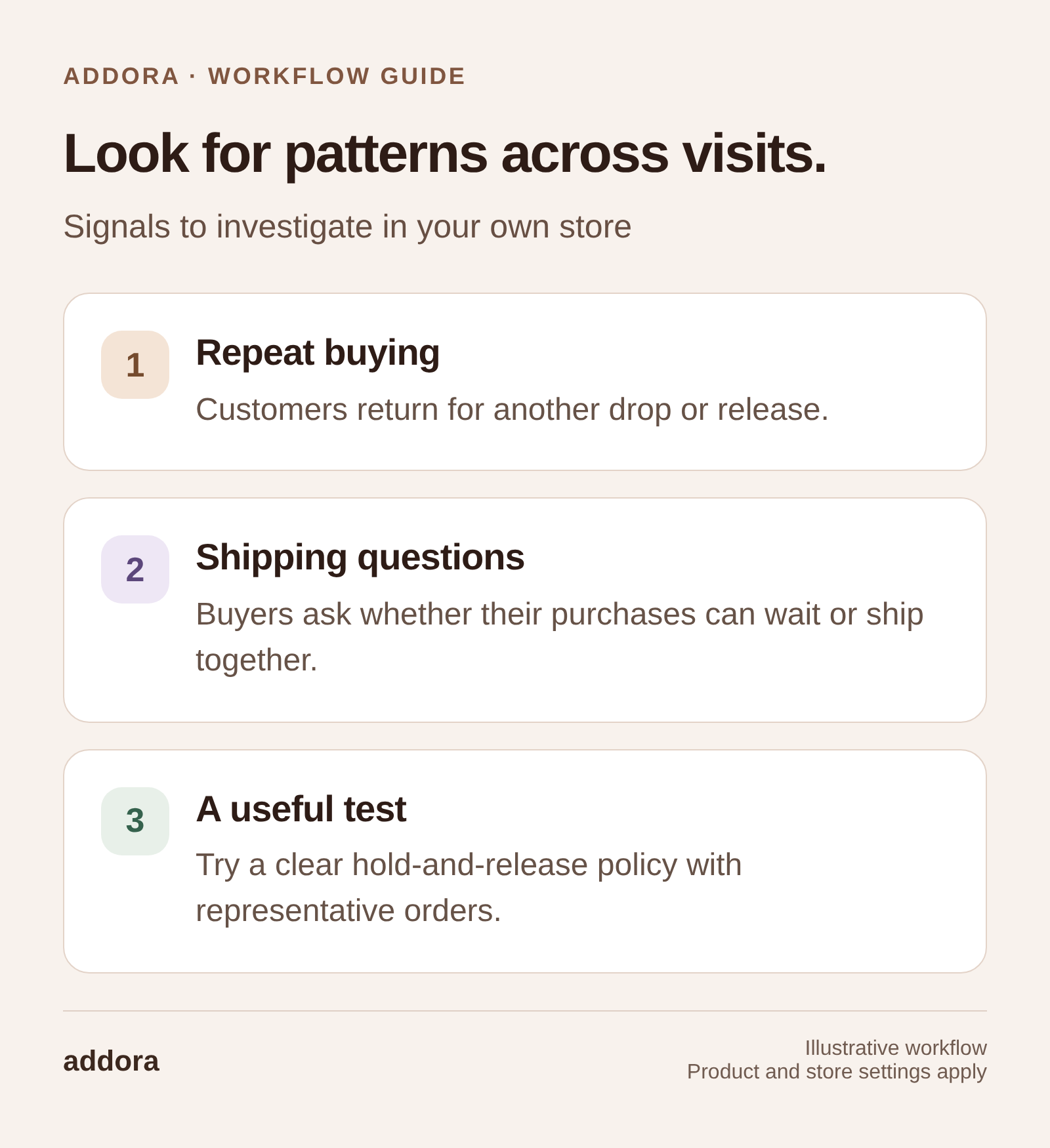
View this workflow at full size
Repeat purchases in short timeframes
One of the clearest indicators is customers placing multiple orders within days or weeks. They buy during a drop, return for a restock, and add related items later. Those transactions are not isolated. They are part of a broader collecting journey.
When each order automatically triggers a separate shipment, customers end up paying shipping fees repeatedly and receiving fragmented deliveries. Over time, that repetition creates friction.
If this sounds like your store, our Build a Box guide explains the purchasing pattern. The customer accounts guide shows how buyers can return to their held purchases without coordinating everything through support.
Behavior around free-shipping thresholds
Customers often hover just below the threshold, add filler products, or abandon their cart and return later. In many cases they are not resisting spending; they are trying to optimize value over time instead of in a single checkout.
Drop culture and urgency without shipping pressure
Collectible stores often operate on drops and limited editions. Customers want to lock in availability before something sells out, but they may still prefer to wait and ship once their box is fuller or another drop has launched. Shipping flexibility preserves the speed of purchase while giving control over fulfillment timing.
For a seasonal version of this pattern, see the BFCM Ship Later checklist. Our article about customer reactions to flexible shipping on Instagram offers a separate qualitative example of what buyers ask for.
High-repeat customers and long-term collecting
If your store has strong repeat-purchase behavior, that is another sign flexibility will resonate. Collectors are building sets, completing series, or curating collections over time. Flexible shipping supports that mindset by treating purchases as part of an ongoing collection rather than isolated transactions.
Shipping cost sensitivity is often structure sensitivity
Sometimes shipping concerns look like price resistance, but often they are really about structure. Customers object to paying for shipping repeatedly across multiple small shipments. Consolidation increases perceived value while protecting margin, and it also reduces packaging waste and courier touchpoints.


