
The Shopify conversion gap: low-stock urgency gets shoppers interested, checkout closes the sale
Low-stock messaging is powerful because it reaches shoppers at the moment they are closest to making a decision.
When someone sees a product they want and notices that only a few are left, the purchase suddenly feels more urgent. Waiting no longer feels neutral. It feels risky.
That is why back-in-stock notification apps, low-stock counters, inventory alerts, and urgency messaging tools can be so effective for Shopify stores. They help turn passive interest into action by showing shoppers that a product is available now but may not remain available for long.
But there is a second moment that matters just as much:
Checkout.
A customer can respond to an inventory alert, feel urgency on the product page, add the item to their cart, and still pause before paying.
Not because they no longer want the product, but because the shipping experience does not match how they actually shop.
For stores selling limited drops, collectibles, beauty products, fashion pieces, records, trading cards, hobby products, or small-batch releases, this is a common problem.
The shopper wants the item now. They just might not want to ship it yet.
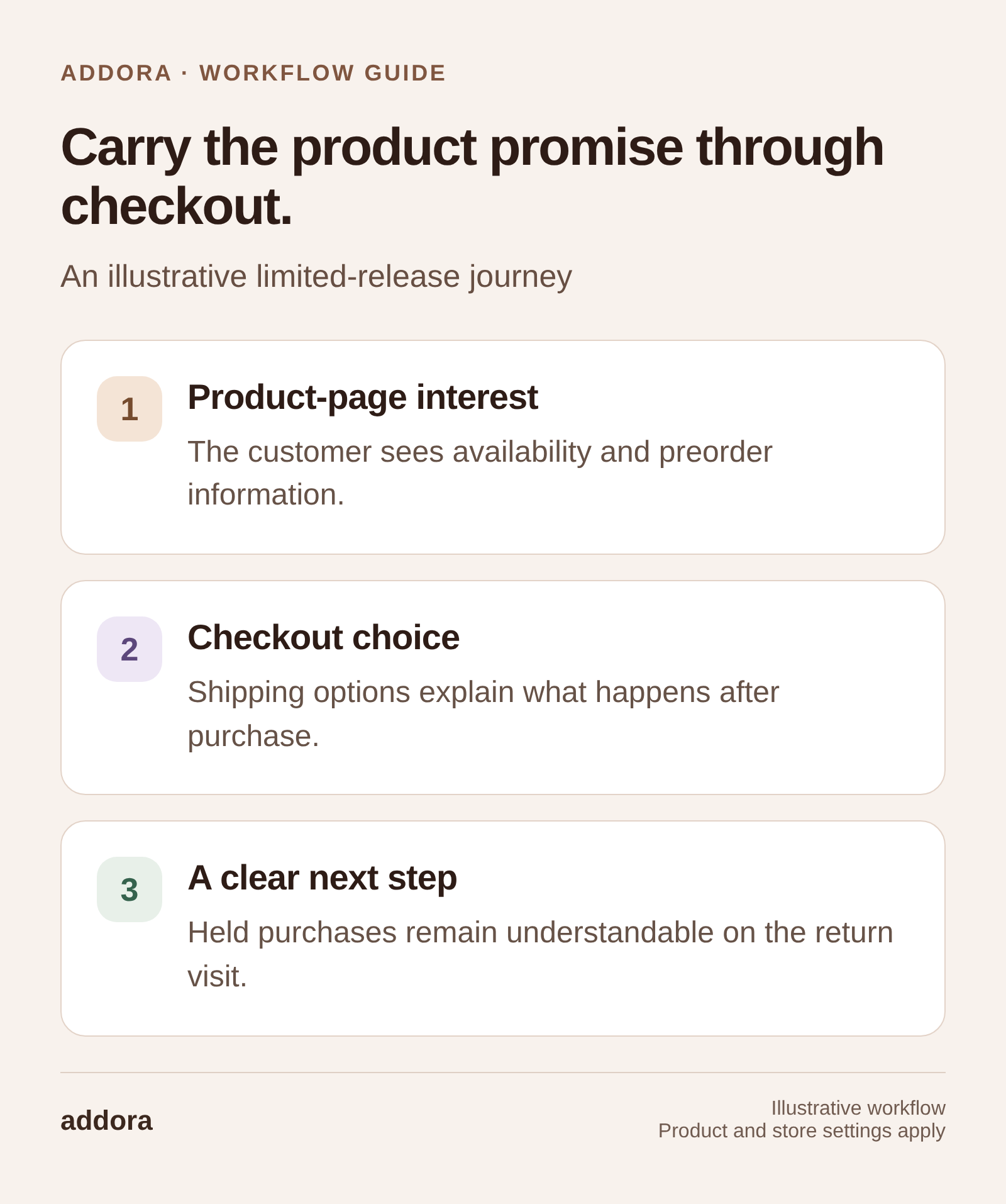
View this workflow at full size
Inventory messaging gets the customer moving
Shopify apps that offer back-in-stock alerts, real-time inventory messaging, low-stock counters, or limited-availability notifications give shoppers a reason to act.
A product might sit in someone’s mind as:
“Something I like.”
Then they receive a restock notification or see that only a few units remain.
The decision changes to:
“If I wait, this might be gone.”
This is especially valuable for stores where products sell through quickly, launch in limited quantities, or return to stock unpredictably.
Back-in-stock notifications reconnect brands with shoppers who have already expressed interest. Low-stock messaging helps turn that interest into immediate purchase intent.
Used honestly, this kind of urgency does not need to feel pushy. It simply makes availability clearer.
The shopper understands that the product is available now, but may not be available later.
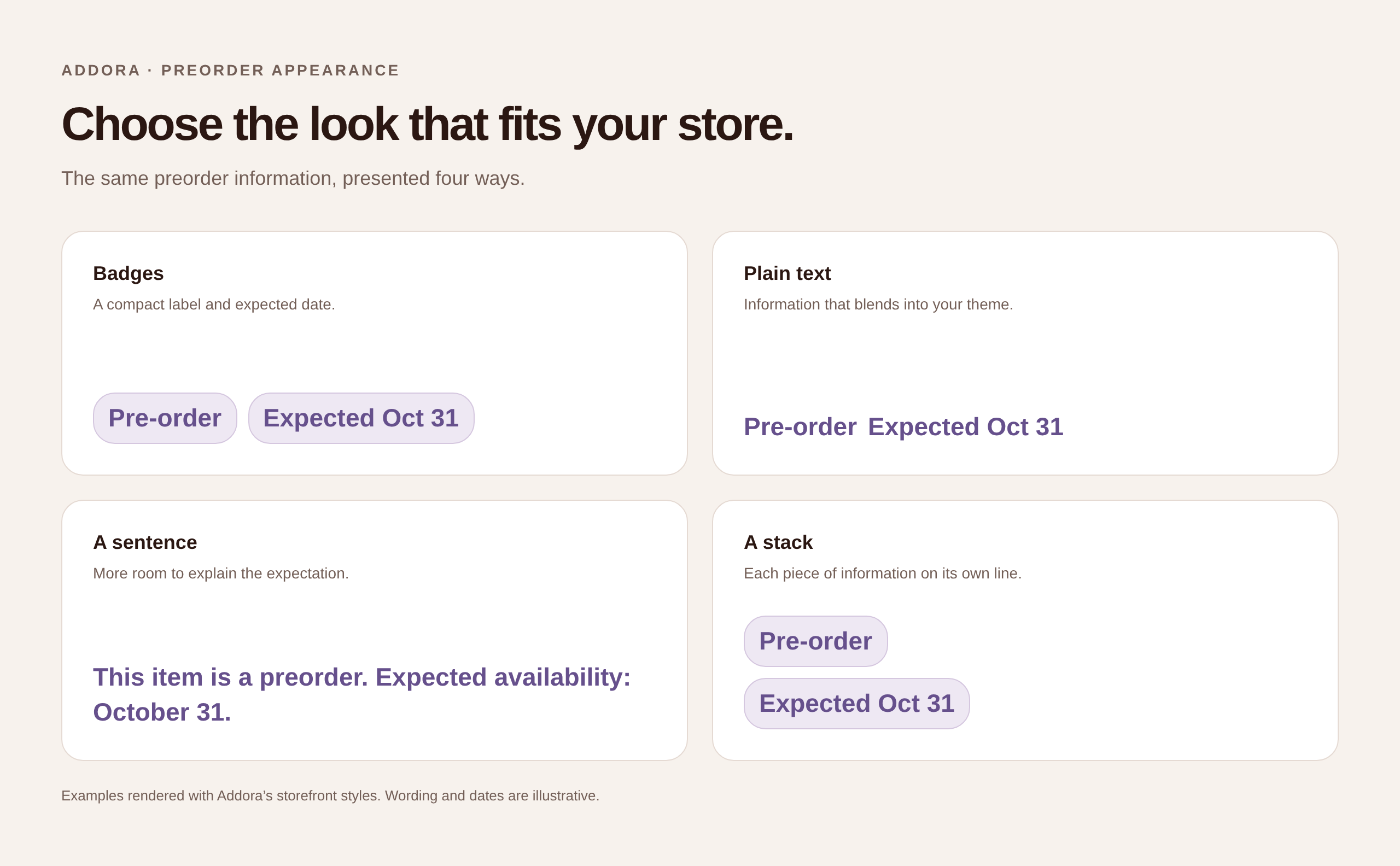
View the preorder appearance examples at full size
The problem is what happens next
Once the shopper adds the item to their cart, the buying journey is not over.
They still need to complete checkout.
This is where many high-intent shoppers slow down.
They may see the shipping fee and start calculating whether the order is worth placing today. They may know that another item is launching soon. They may be waiting for a preorder, another colour, a matching product, a new release, or another restock notification.
They may also be close to the store’s free-shipping threshold and not want to pay for delivery before they have had an opportunity to add more.
Even though the inventory message worked, a new hesitation appears:
“I want this now, but I don’t want to pay shipping for one item.”
“I’m close to free shipping, so perhaps I should wait.”
“What if something else comes back into stock tomorrow?”
“Can the store hold this until I’m ready to ship?”
That hesitation is easy to underestimate.
The customer is not rejecting the product. They are trying to make the order feel more efficient.
For many stores, particularly those with loyal repeat buyers, customers do not shop in one perfect session. They buy across drops, releases, restocks, and availability windows.
They return when another item becomes available and try to make the shipping cost feel worthwhile.
If checkout only supports “ship this order now,” the customer may delay the purchase.
Once they delay, the sale is at risk.
Shipping hesitation can undo product-page momentum
Inventory and urgency messaging create momentum.
Shipping friction can break it.
This happens most often when customers want to secure a product quickly, but the shipping cost feels difficult to justify for a single item.
Examples include:
- A comic collector buying one issue from a new drop
- A vinyl customer securing one limited pressing
- A beauty shopper receiving a restock alert for one popular shade
- A fashion customer buying a bag while waiting for matching accessories
- A hobby customer buying one product while expecting another release soon
- A shopper who is close to free shipping but has not reached the threshold
In each case, the shopper has a reason to buy now.
But they also have a reason to hesitate at checkout.
That is the gap Addora is built to close.
Addora helps protect the checkout moment
Addora lets Shopify stores offer a Buy Now, Ship Later or combined-shipping option at checkout.
Customers can purchase an item while it is available, keep building their order, and ship eligible purchases together later.
Instead of forcing the shopper to choose between securing the product now and saving on shipping later, Addora gives them a more flexible path.
They can act on a back-in-stock notification or low-stock message.
They can complete the purchase before the product disappears.
They can then return for another release, restock, or product drop and consolidate eligible orders when they are ready.
This is also useful for customers who want to keep adding items until they reach the store’s free-shipping threshold.
For merchants, Addora can reduce the manual work associated with combined-shipping requests.
Instead of relying on customer emails, order notes, manual holds, duplicate shipping charges, and partial refunds, the option becomes part of the checkout experience.
The customer sees the choice before completing the purchase, and the merchant receives a more structured way to manage held orders.
The product-page promise still needs to be clear. Our preorder and email styling guide shows how to present expected availability consistently. For the steps after a held purchase, see the combined shipping guide.
How inventory apps and Addora complement each other
Back-in-stock and low-stock apps address the discovery and product-decision stage.
Addora addresses the checkout stage.
Together, the customer journey can look like this:
- A shopper receives a back-in-stock notification or lands on a product page.
- They see that the item is available or running low.
- They understand that waiting could mean missing out.
- They decide to purchase now.
- At checkout, Addora gives them the option to ship later.
- They secure the product and continue building their order.
- They request shipping when they are ready or once they have met the store’s free-shipping threshold.
The inventory message gives the customer a reason to act.
The checkout option gives them a reason not to stop.
These apps do not need a direct technical integration to support the same customer journey. They can work alongside one another by solving two connected forms of hesitation.
A simple example
Imagine a Shopify store selling limited-edition bags.
A customer receives a notification that a bag is back in stock. When they visit the product page, they can see that only three remain.
The urgency works. They want to secure the bag before it sells out again.
But at checkout, the shipping fee makes them pause.
Perhaps the brand is releasing matching accessories the following week. Perhaps another colour is due to return soon. Or perhaps the shopper is simply below the free-shipping threshold and would rather add more before paying for delivery.
Without a flexible shipping option, they may wait and plan to place one larger order later.
By then, the bag could be gone again, or the customer may forget to return.
With Addora, the customer can buy the bag now, choose Ship Later at checkout, and keep building their order until they are ready to ship everything together.
The inventory app helped bring the customer back and create urgency.
Addora helped remove the shipping hesitation.
The result is a smoother path from product availability to completed order.
This matters most for stores with repeat-buying behaviour
The model is most valuable for stores where customers regularly purchase across different moments, releases, or availability windows.
That includes:
- Fashion stores with limited drops and matching collections
- Beauty stores with popular shades, routine-building products, and frequent restocks
- Record stores with new releases, preorders, and limited pressings
- Comic book and trading-card stores with frequent drops
- Collectibles stores where customers build orders over time
- Stationery, craft, and hobby stores with smaller items and repeat buyers
For these stores, purchasing behaviour is rarely linear.
Customers do not always wait until everything they want is available at once. They may want to secure one item today, respond to another restock notification next week, and add something from a new release later.
They may also be trying to reach a free-shipping threshold without risking that the original item sells out first.
Inventory messaging helps them act before they miss out.
Addora makes that decision easier to complete at checkout.
Manual combined shipping creates hidden work
Many merchants already know customers want this flexibility because they provide it manually.
Customers email asking:
“Can you hold this order?”
“Can you combine this with my previous purchase?”
“Can I add this to my box?”
“Can you refund the additional shipping charge?”
At a small scale, merchants may be happy to help. Over time, however, the process creates avoidable administration.
Manual combined shipping can mean more customer-service messages, order notes, refunds, fulfilment exceptions, and opportunities for mistakes.
It also creates friction for shoppers. They need to know the option exists, contact the merchant, explain the request, and wait for a response.
Addora makes the workflow more visible and consistent.
Instead of remaining a manual workaround, Buy Now, Ship Later becomes part of the customer’s checkout experience.
Urgency works better when checkout supports it
A back-in-stock notification or low-stock message can help a shopper decide faster.
But if checkout gives them a new reason to hesitate, some of that momentum is wasted.
The goal should not be to pressure shoppers into rushed purchases. It should be to remove the conflict between securing the product and making shipping feel worthwhile.
Let the shopper buy the item while it is available.
Let them keep building their order if that reflects how they naturally shop.
Let them ship eligible purchases together when they are ready.
The customer gains flexibility.
The merchant receives fewer manual requests.
The store has a better chance of turning inventory-driven intent into a completed purchase.
Partnership opportunities
Addora is open to partnerships with Shopify apps offering:
- Back-in-stock notifications
- Low-stock counters
- Inventory alerts
- Restock messaging
- Product-drop notifications
- Ethical urgency or scarcity messaging
These apps solve an important part of the conversion journey by helping customers discover when products become available and understand when they may sell out.
Addora supports the next stage by helping merchants reduce shipping hesitation at checkout.
We would be interested in exploring educational content, shared merchant resources, compatibility testing, referrals, directory listings, and co-marketing opportunities with teams operating in this space.
Final thought
Low-stock and recently restocked shoppers are high intent because they are already close to making a decision.
They have found the product.
They know it may not remain available for long.
They are deciding whether to act now.
Back-in-stock and urgency-messaging apps help Shopify stores create that momentum through inventory alerts, availability information, and timely notifications.
Addora helps protect the next step by giving customers the option to buy now, continue building their order, and ship eligible purchases together later.
For stores built around drops, limited inventory, repeat purchases, or collectible products, these tools can be more effective together than separately.
Create urgency around availability, then remove shipping hesitation at checkout—whether the customer is waiting for another release, expecting another restock, or simply trying to reach free shipping.


