Launched in 2008, Record Store Day (RSD) began as a grassroots effort to celebrate independent record shops at a time when digital downloads were dominating music consumption. Spearheaded by a group of US store owners and supported by artists and labels, the idea was simple: drive foot traffic back into physical stores through exclusive releases, community events, and a shared cultural moment.
It worked. What started as a niche initiative quickly became a global event, with limited-edition vinyl drops, artist appearances, and long queues forming outside independent stores each April. RSD didn’t just celebrate record shops—it helped reframe them as cultural hubs again.
How Things Have Changed
Over the past decade, Record Store Day has evolved alongside the broader vinyl resurgence. What was once a defensive move to save indie stores has become a key commercial and cultural date in the music calendar.
A few notable shifts:
- From survival to demand: Vinyl is no longer niche. It’s a growing format, attracting both collectors and younger audiences.
- From local to global hype: RSD releases now generate international buzz, with fans tracking drops weeks in advance.
- From single-day event to extended momentum: Many stores now stretch the experience across multiple days, online drops, and post-event releases.
- From casual browsing to strategic buying: Customers plan purchases carefully, often prioritising limited editions and bundling multiple records.
Record Store Day in 2026: What’s Different Now
By 2026, Record Store Day looks less like a one-day event and more like a hybrid retail moment shaped by both physical and digital behaviours.
1. Drop Culture Has Fully Arrived Customers treat RSD like a “drop”—similar to streetwear or sneakers. They follow announcements, set reminders, and prioritise specific releases.
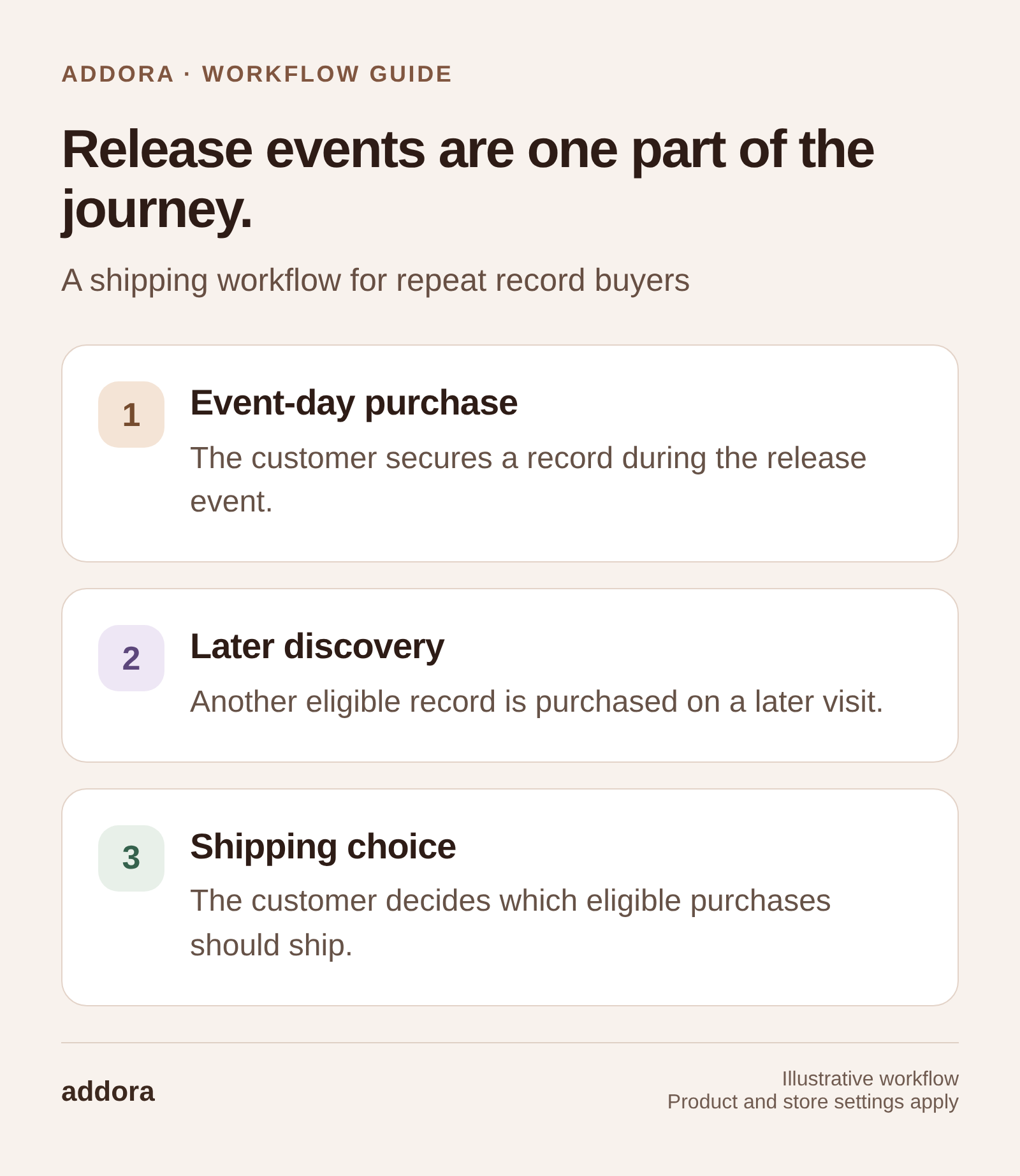
2. Multi-Order Behaviour Is the Norm Shoppers rarely buy just one record. They build collections across multiple drops, sometimes purchasing weeks apart as new releases land.
3. Sustainability Is No Longer Optional With growing awareness around packaging and shipping, customers (and stores) are paying more attention to how orders are fulfilled—not just what’s inside them.
4. Blended Online + In-Store Experiences Even traditionally offline shops now see significant traffic online during RSD. Customers might browse in-store, then continue purchasing digitally.
The Gap: Buying Has Evolved But Shipping Hasn’t
Here’s the friction point most stores still face:
Customers want to buy across multiple moments (drops, paydays, discoveries)… But shipping still assumes one purchase = one shipment.
That leads to:
- Higher shipping costs for customers
- More packaging and environmental impact
- Lost sales when customers hesitate to commit to multiple separate orders
Where Addora Fits In
This is exactly the gap Addora is designed to solve.
Addora allows customers to purchase records without immediate shipping, “store” them virtually, and then bundle everything into a single shipment when they’re ready.
For record stores, that means:
- Customers can keep buying across multiple drops without worrying about repeated shipping fees
- Natural encouragement to build larger baskets over time
- Fewer shipments, aligning with sustainability goals
- A smoother experience for collectors who already think in terms of “adding to their collection,” not one-off purchases
Instead of forcing customers to choose between buying now or waiting, you give them a third option: buy now, ship later - together.
For everyday operations between release events, use our vinyl-store shipping guide. The combined shipping guide explains how to coordinate eligible purchases placed on different days.
A Natural Evolution for Record Stores
Record Store Day started as a way to bring people back into shops. In 2026, the opportunity is to evolve how those shops serve customers without losing what made them special in the first place.
The next wave of innovation in record retail isn’t just about what you sell. It’s about how customers are able to buy, build, and receive their collections.
And that’s where small changes at checkout can make a surprisingly big difference.